



5 Best Golf Simulator Enclosures Reviewed: 2026 Buyer’s Guide
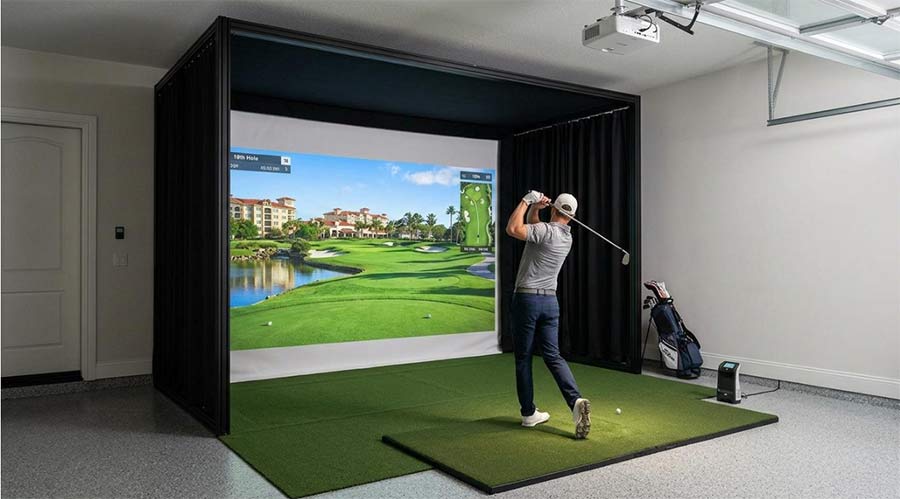
Oklahoma winters have a habit of shutting down your game right when you have finally found something in your swing. A home simulator fixes that, but the piece most buyers underestimate is the golf simulator enclosure. It is the frame, screen, and walls that turn a launch monitor and a projector into a room you actually want to hit in. Get it right and you play year-round. Get it wrong and you spend the offseason patching drywall.
Why the enclosure is the part people get wrong
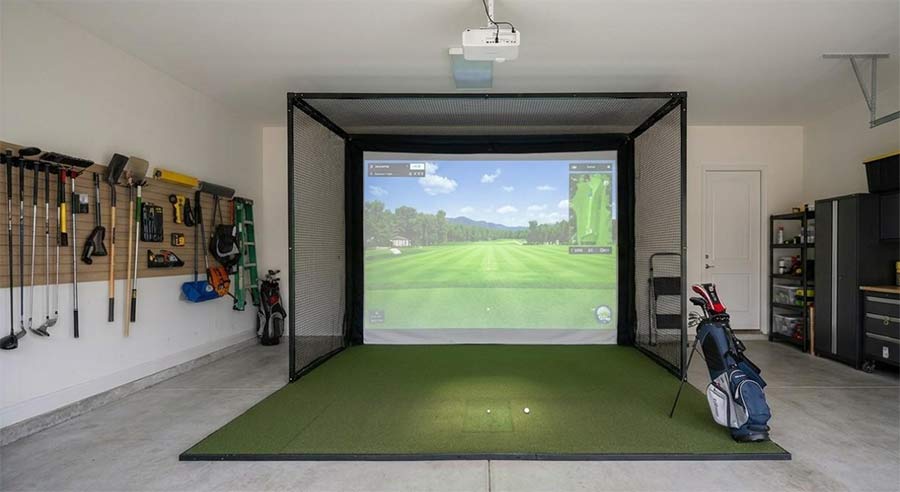
Golfers obsess over launch monitors and forget that the enclosure is what protects the room, sharpens the image, and catches the shank that would otherwise find a window. It is also the reason indoor golf has stopped feeling like a compromise. A well-built enclosure controls the light, contains the ball, and gives the projected image a clean surface to land on, which is the difference between a setup you tolerate and one you play on four nights a week.
That shift is exactly why a good enclosure matters. A simulator lets you keep score in January and work on focus and course management for the real thing, but only if the space around the screen is built for it. The five enclosures below cover different budgets, room sizes, and build styles, so there is a realistic option whether you are converting a garage or fitting out a dedicated basement bay.
The 5 best golf simulator enclosures in 2026
Each of these has been chosen for build quality, screen performance, and how well it fits a normal home rather than a showroom. Sizes, screen ratings, and setup time are noted so you can match one to your space before you buy.

1. Golfbays SimBox
The SimBox earns the top spot because it handles the difficult part well without requiring you to become a contractor. The aluminium frame clicks together without tools in around 45 minutes, and a black velvet surround keeps the room dark so the projected image holds its contrast. It ships with the triple-layer HD PRO+ impact screen and side barrier nets included, which is not always the case at this price.
Durability is the quiet strength here. The screen is rated to absorb ball speeds well beyond anything a home golfer generates, so the enclosure shrugs off years of hard driver sessions without complaint. The SimBox from Golfbays comes in seven sizes, from a compact 8’6″ wide frame up to a room-scale 13’2″ x 9’10” x 9’10” build, and the whole thing folds down if you need the garage back on weekends.
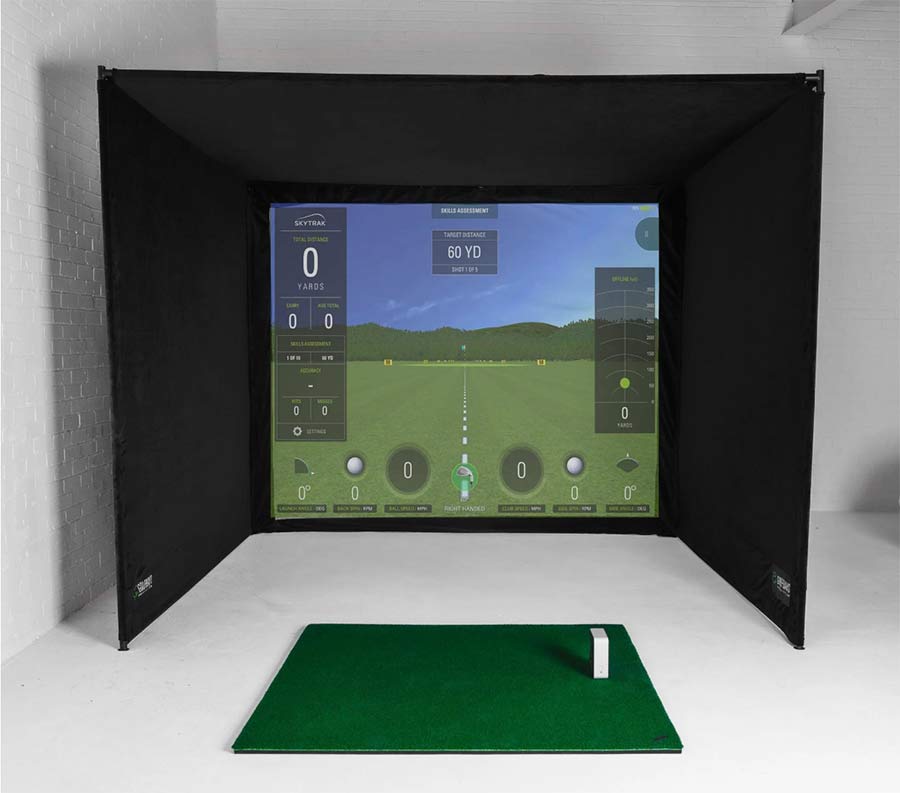
It works with any launch monitor, and optional add-ons like a mounted projector arm, a foam backing layer, and acoustic panels let you tune it for image and noise. For a first serious setup that you will not outgrow in a season, it is the most complete all-in-one option on this list.
2. The Indoor Golf Shop SIG Series
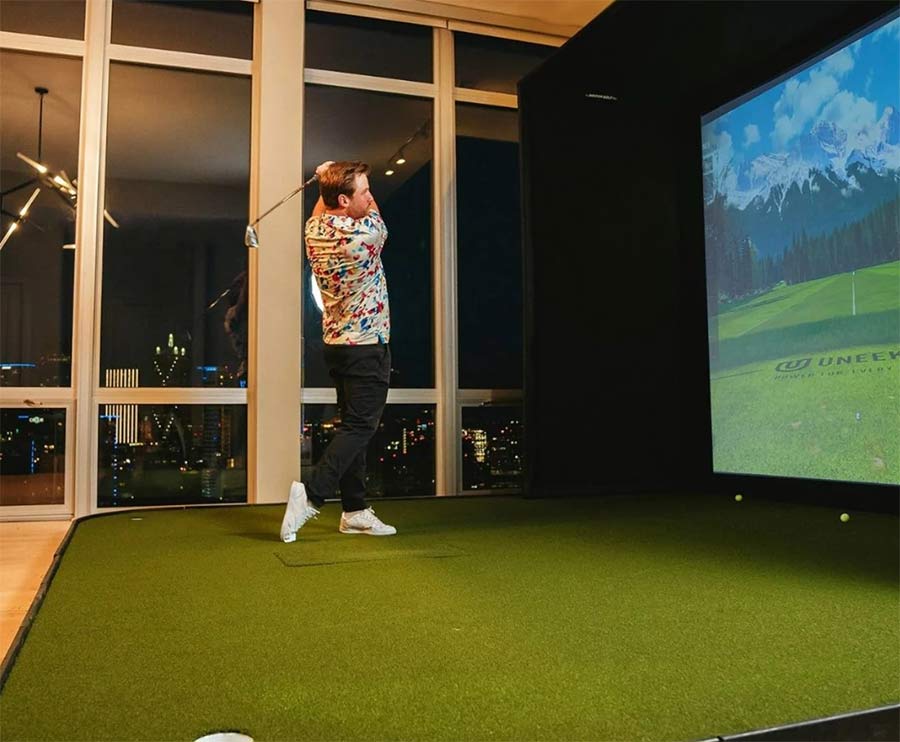
The SIG10 is the pre-built premium benchmark most other enclosures get measured against. The powder-coated steel frame, tight-knit polyester screen rated to 250 mph, and optional Premier Gray material for brighter spaces add up to a picture and a build that feels a tier above budget kits. It assembles in about an hour and fits standard 9-foot ceilings, which is more than a lot of “home” enclosures can honestly claim.
For bigger or commercial rooms, the heavier-duty SIGPRO enclosure from The Indoor Golf Shop steps up to 2″ piping you can mount projectors and cameras directly onto, plus a huge range of sizes and custom dimensions. It is not the cheapest route, but if you want a permanent, polished bay and image quality is your priority, the SIG line delivers.
3. Rain or Shine Golf SwingBay
The SwingBay lands in the sweet spot between DIY kits and premium studios. Designed off feedback from hundreds of simulator owners, it pairs a 7’3″ x 9’8″ screen rated to 250 mph with commercial-grade blackout side and upper walls that keep stray light off the image and catch mishits that miss the screen. It comes in an 8′ x 10.5′ size and a larger 9′ x 12′, and it shows up in some of the most popular complete packages on the market for good reason.
One practical note: the walls block a fair amount of light, but you will still get the best results pairing the SwingBay from Rain or Shine Golf with a 3,000-lumen or brighter projector. For a mid-range setup that looks sharp and installs without drama, it is a smart middle path.

4. Carl’s Place DIY Enclosure
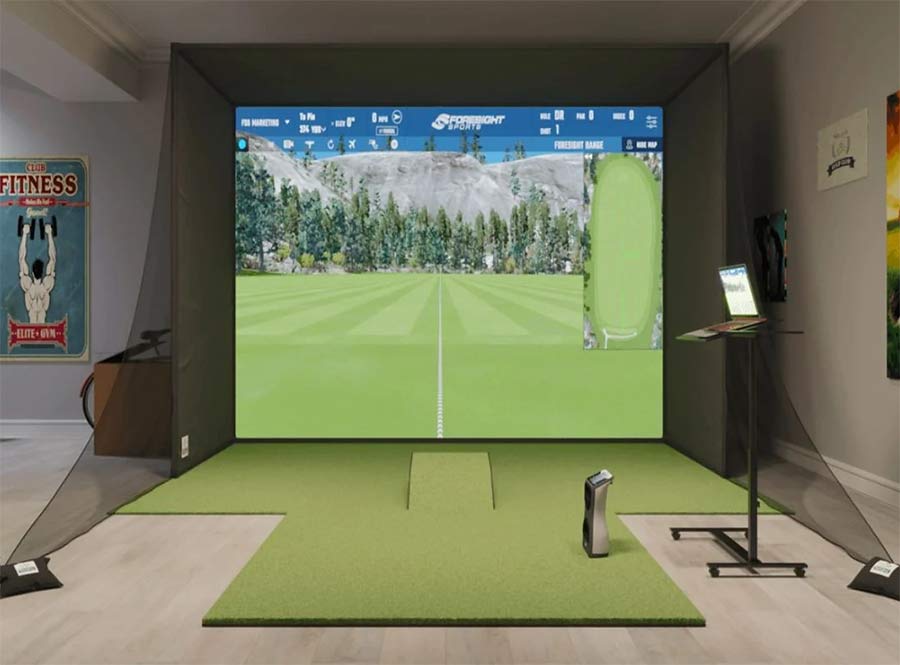
Carl’s Place has been building enclosures since 2006, and their DIY kit is the pick for anyone with an odd-shaped room or a strong opinion about every component. You choose the screen tier, the size, and the accessories, and they will even custom-cut an enclosure to the inch. Screen options run from a standard woven polyester up to a triple-layer premium with noise-dampening and a high-contrast gray for brighter rooms.
The trade-off is effort. The base kits use 1″ EMT pipe that is fine structurally but not meant for mounting electronics, so if you want to hang a projector or overhead launch monitor from the frame, you will want their sturdier Pro version. The recent design also lets the screen sit flush with the floor for a cleaner, more immersive look. If you enjoy hand-picking parts and want to stretch a budget, this model is the one.
5. HomeCourse ProScreen 180
The ProScreen 180 is the answer when the simulator room has to double as something else. It is fully retractable, disappearing at the press of a button in under 30 seconds thanks to a battery-powered motor and wireless remote. That makes it ideal for a living room, a shared garage, or any space you cannot dedicate to golf full-time.
The screen uses ballistic-grade material that shrugs off driver shots at close range, and the Pro Arms work as enclosure side walls or extend outward to create a 14-foot projectable area. Minimum space is roughly 8.5′ high by 10′ wide by 8′ deep. It is a different animal from a fixed enclosure, but for multi-purpose rooms, it is unmatched.
How to choose a golf simulator enclosure
The best enclosure is the one that fits your room, your swing, and your budget in that order. Home setups have gone mainstream quickly, with much of golf’s recent growth coming from off-course play at driving ranges, entertainment venues, and home simulators, according to the National Golf Foundation, so the market now caters to almost any space. These are the factors that actually decide whether you are happy six months in.
Measure your ceiling height before anything else
This is the mistake that sinks more home builds than any other. Plenty of enclosures are sold as home-ready, but most American homes have 8-foot ceilings, and a full driver swing needs more clearance than that for a tall player. Before you fall for a screen size, stand in the room and take a slow driver swing with a club in hand. If the ceiling is tight, prioritize enclosures with lower-height options and confirm the swing clearance, not just the frame dimensions.
Match size and aspect ratio to the room
The enclosure sets the width and height of your whole setup, so compare its minimum space requirements against your actual room, not the room you wish you had. Most enclosures and screens are built for 4:3 projection, which suits squarer spaces, while a 16:9 widescreen image wants a wider, more rectangular frame. If your room is unusual, look for brands that offer custom sizing rather than forcing your space to fit a stock kit.
Check the frame and screen ratings
The frame holds everything together, so it should be steel or aluminium, and thicker piping matters if you plan to mount a projector or overhead launch monitor directly to it. Screen ratings can look like marketing, but they translate to lifespan: a screen built for high ball speeds simply lasts longer under repeated impact. For perspective, the average PGA Tour driver ball speed is about 167 mph, with the fastest ever recorded at 241.6 mph by long-drive champion Kyle Berkshire, per Trackman, so any screen rated to 200 mph or more comfortably absorbs a home golfer’s hardest strike. Triple-layer screens also run quieter and show a cleaner image than single-layer budget options.
Think about noise before your family does
A ball strike against an impact screen is loud, and that sound travels straight into the bedroom above a basement bay or through a shared garage wall. Screens with a noise-dampening center layer help, and add-ons like foam backing panels and acoustic tiles make a real difference in a home setting. If you are building under a living space or in an apartment, treat sound control as part of the enclosure decision, not an afterthought.
DIY kit or done-for-you
An enclosure is one component of a larger build that also includes a projector, launch monitor, mats, and cabling, and getting all of it to work together is where DIY projects stall. If piecing it yourself sounds like more headache than hobby, it is worth knowing that professional planners exist, and a look at the best golf simulator design services for 2026 shows how much of the guesswork a good designer removes. For a straightforward rectangular room, a quality all-in-one enclosure gets you most of the way on its own.
Budget and what drives the price
Size and framing are the biggest cost levers, since a bigger enclosure needs more pipe, screen, and blackout material. Home-friendly enclosures generally start in the low four figures and climb from there with premium screens, heavier frames, and custom sizing. The good news is that competition has never been stronger. The global golf simulator market is valued at more than $2 billion and is projected to keep growing at nearly 9% a year, according to Grand View Research, and that demand has pushed genuinely good options into every price tier.
Frequently asked questions
What is a golf simulator enclosure?
A golf simulator enclosure is the frame, impact screen, and blackout walls that house your simulator. It frames the projected image, blocks ambient light for a clearer picture, and contains errant shots so they do not hit walls, windows, or people. It is the structural core that turns a launch monitor and projector into a usable indoor golf room.
How much space do I need for a golf simulator enclosure?
Most home enclosures want a room around 10 feet wide, 9 to 10 feet high, and at least 12 feet deep, though radar-based launch monitors need more depth behind the ball than camera-based ones. Ceiling height is usually the limiting factor, since a full swing needs clearance overhead. Always check the swing space, not just the frame footprint.
How much does a good golf simulator enclosure cost?
Home-friendly enclosures typically start in the low four figures and rise with size, screen quality, and custom options. All-in-one kits that include the screen and side netting tend to offer the best value for a first build. Commercial-grade enclosures with heavy steel framing and premium screens cost considerably more.
Can I put a golf simulator enclosure in my garage?
Yes, and garages are one of the most popular spots for home setups. Confirm you have the ceiling height for a full swing, and account for temperature and humidity, which can affect screens and electronics in an unconditioned space. Blackout walls also matter more in a garage where you cannot fully control the light.
Do golf simulator enclosures come with an impact screen?
Some do and some do not, so read the listing carefully. All-in-one options like the SimBox include the screen and side barriers in the base price, while DIY kits often let you select the screen tier separately. Buying the screen and enclosure together usually guarantees a proper fit with no gaps around the edges.
What aspect ratio should my enclosure be?
Most enclosures and screens are built for 4:3 projection, which fills squarer frames well and suits the majority of simulator software. A 16:9 widescreen image needs a wider, more rectangular enclosure. Choose based on your room shape and the projector you plan to use.
How loud is a golf simulator, and can I reduce the noise?
The main noise is the ball hitting the screen, which is sharp but brief. Triple-layer screens with a dampening center layer, foam backing panels, and acoustic tiles all cut the sound noticeably. If your setup sits under or beside a living space, plan for sound treatment from the start.
How long does it take to set up an enclosure?
Tool-free kits like the SimBox click together in around 45 minutes, while framed steel enclosures such as the SIG10 take about an hour. DIY builds vary widely depending on how much cutting and assembly you take on. Retractable systems like the ProScreen 180 install once and then deploy in seconds.
Are golf simulator enclosures safe for hard shots?
Quality enclosures are built for exactly this. Impact screens are rated well above the ball speeds any golfer generates at home, and blackout walls plus side and top netting catch shots that miss the screen. Foam padding on the frame prevents dangerous ricochets off the piping.
Can I use any launch monitor with these enclosures?
Most enclosures are launch-monitor agnostic, so a SkyTrak, Uneekor, Garmin, or FlightScope unit will work with any of the options here. What changes is the space you need behind and above the ball, since radar and camera systems have different placement requirements. Check your monitor’s space specs against the enclosure depth before buying.
The bottom line
The enclosure is the part of a home simulator that quietly decides how good the whole experience feels, from image quality to how confidently you can swing without worrying about the walls. For most golfers building their first serious setup, an all-in-one option that includes the screen and netting is the safest path to a room you will actually use. Measure your ceiling, match the size to your space, and the rest of the winter takes care of itself.